Overview
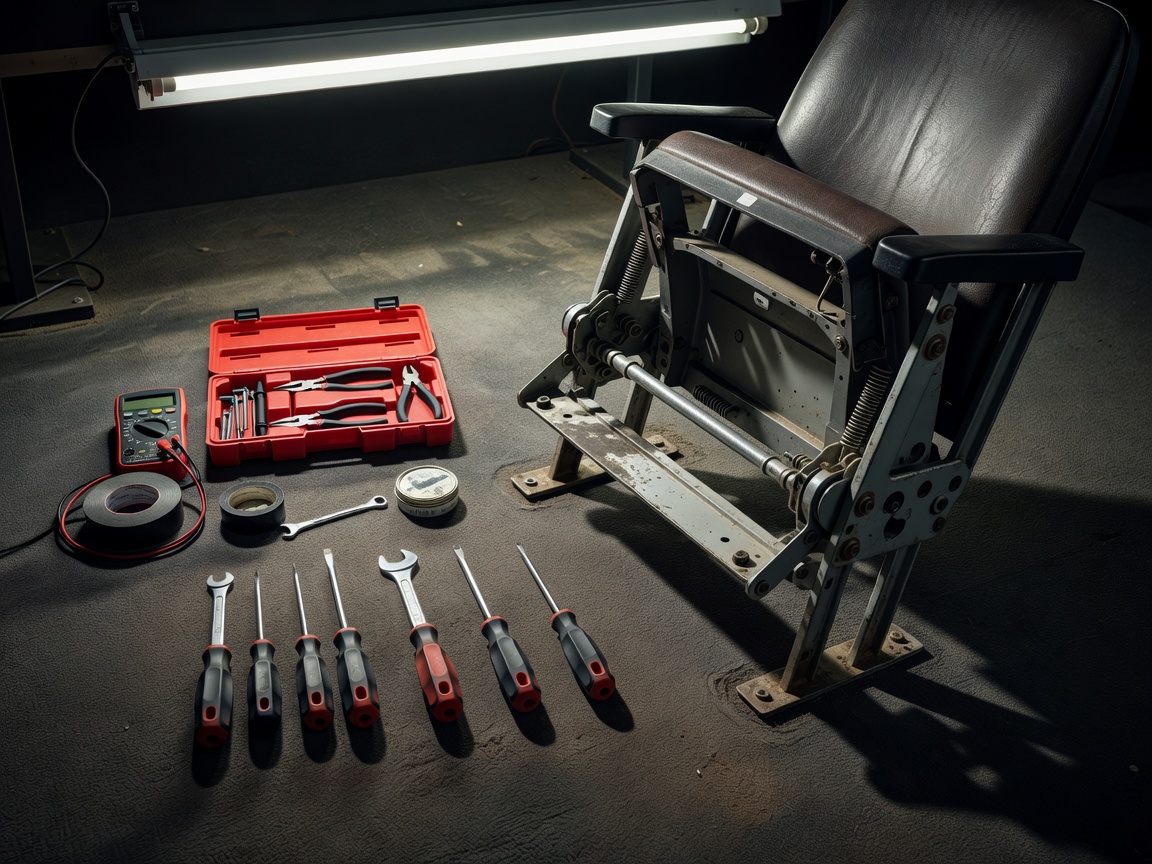
Theatre seats are working assemblies. Hinges, springs, seat pans, backrests, armrests and fixings interact every time a seat is occupied or folded. Repair begins with fault identification, followed by a controlled adjustment or component replacement that matches the existing system.
Typical scope
- Identify loose, noisy, stiff or incomplete seat movement.
- Check hinges, springs, pivots, stops and return action.
- Inspect floor fixings, brackets, fasteners and row interfaces.
- Repair or replace compatible armrests, seat pans and trim.
- Record seat numbers, repeated faults and parts used.
- Build a recurring inspection schedule around venue use.
Key inspection points
Start with the seat number and row. Observe movement, listen for noise and check whether the seat returns to its intended position. Look for side play, damaged pivots, stretched springs, loose fasteners, cracked pans and interference with adjacent seats. Check upholstery separately so a cosmetic fault is not mistaken for a mechanical one.
Materials and components
Replacement work may involve hinges, springs, pins, washers, fasteners, brackets, seat pans, armrests, covers and foam. Compatibility must be confirmed. Similar-looking parts may differ in fit or movement. Manufacturer information, existing samples and measured interfaces are useful; unsupported substitutions should be avoided.
Maintenance considerations
Maintenance should follow the venue’s operating pattern. High-use rows, public contact points and seats exposed to repeated folding deserve clear priority. Keep a row-by-row record, photograph unusual faults and separate urgent defects from routine adjustment. Cleaning products should match the upholstery and finish requirements.
Common problems
Loose fixings, noisy return action, seized hinges, broken springs, damaged armrests, split upholstery and seat pan distortion are common findings. Repeated tightening may not solve movement if the substrate or bracket is damaged. A mechanism should not be lubricated without checking the product guidance, because residue can affect upholstery and collect debris.
Advantages and limitations
Planned maintenance makes recurring faults visible and supports better parts planning. It cannot make an incompatible replacement part suitable, nor can it replace a structural review where the floor or seat frame is damaged. Technical requirements and safe operating decisions remain subject to the product information and venue team.
Planning checklist
- Fault list with row and seat numbers.
- Access dates and areas that must remain open.
- Available product manuals or old parts.
- Cleaning and finish requirements.
- Record format for completed and deferred work.
Before service
Mark known faults without removing evidence. Provide access to representative rows and identify any current event restrictions. Confirm whether noisy or stiff seats should be isolated until checked.
Confirm with a contractor
Ask how faults will be classified, what parts are included and how unrepairable seats will be reported. Confirm whether the handover includes seat numbers, photographs, deferred actions and recommended inspection intervals.
Related services
Use inspection planning to find patterns and refurbishment where wear is primarily cosmetic.