Overview
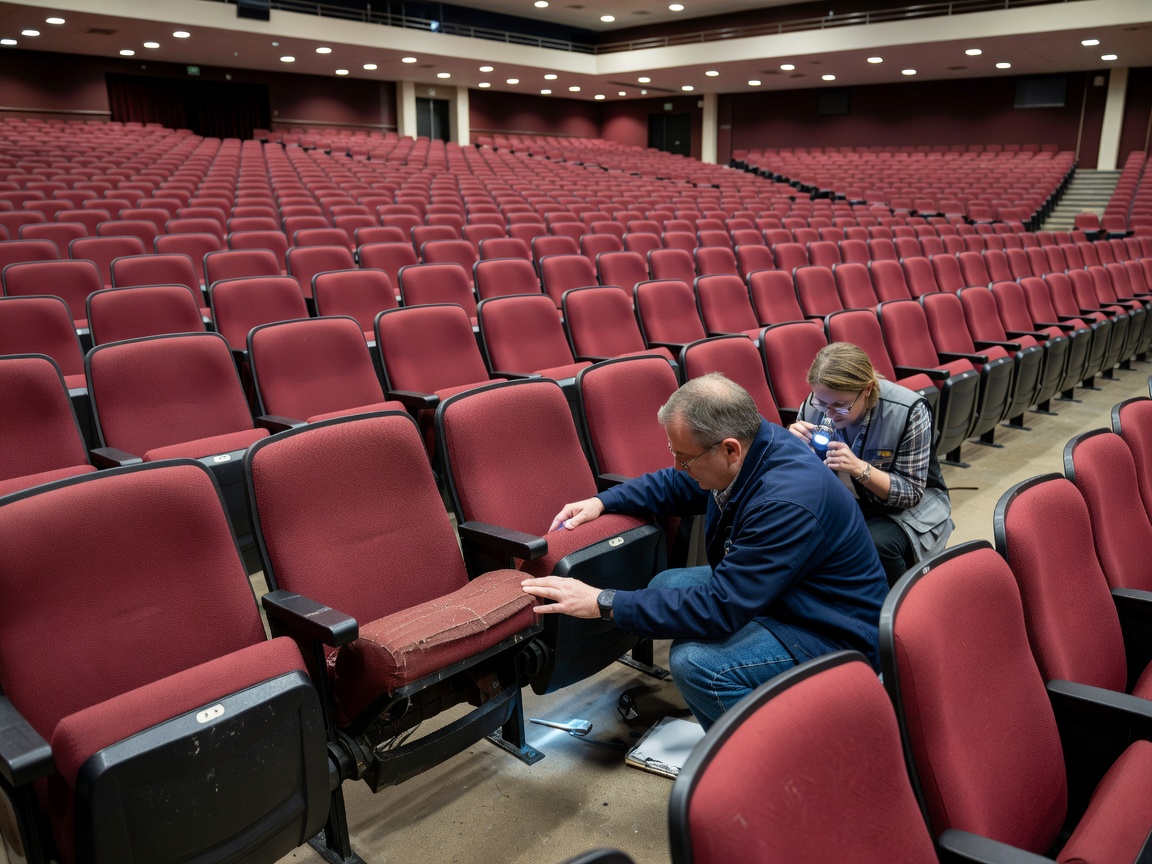
An auditorium inspection creates a practical record of what is present, what is worn and what needs action. The record should identify the exact row and seat, distinguish cosmetic wear from mechanical or fixing concerns and show which issues can be grouped into a planned visit.
Typical scope
- Walk every row and assign a condition status.
- Check upholstery, foam, seat pans, backrests and armrests.
- Observe folding action, hinges, springs and unusual noise.
- Review floor fixings, brackets, row ends and aisle transitions.
- Photograph representative and exceptional conditions.
- Create replacement priorities and maintenance records.
Key inspection points
Use a consistent sequence so no row is missed. Check visible damage, loose components, movement, finish and seat identification. Look beneath seats where accessible. Note whether a fault is isolated or repeated. Repeated faults may point to a common component, installation detail, cleaning method or operating pattern.
Replacement planning
Replacement is not simply a count of damaged seats. It may involve matching adjacent upholstery, checking floor interfaces, confirming row geometry and arranging temporary storage. Product documentation should be reviewed before selecting components. Where a complete system change is considered, layout, access and numbering should be reviewed with the project team.
Materials and components
Records may refer to seat frames, pans, cushions, backrests, armrests, hinges, springs, fasteners, floor plates and finishes. Do not infer load ratings, fire classifications or compatibility from appearance. Confirm technical information against the relevant documentation and local requirements.
Common problems
Unnumbered seats, inconsistent condition language, missing photographs and unclear priorities reduce the value of an inspection. A row marked “worn” does not say whether the issue is fabric, foam, mechanism or fixing. Use concise categories and add an action for each exception.
Advantages and limitations
A consistent survey supports budgeting and scheduling without pretending to replace design advice or a specialist structural assessment. It is a snapshot. Conditions can change through use, cleaning, vandalism or later works. Date the record and state its scope.
Planning checklist
- Current seating plan and numbering convention.
- Access to every row, including closed areas.
- Condition categories agreed before the survey.
- Photograph and record storage method.
- Decision-maker for priority and replacement options.
Before service
Provide previous reports, repair logs and known problem areas. Clear stored items from beneath seats where possible. Confirm whether the inspection will include accessible positions, loose furniture and aisle interfaces.
Confirm with a contractor
Ask for the inspection boundary, report format, sample photographs and treatment of uncertain findings. Confirm whether recommendations separate repair, refurbishment and full replacement.
Related services
Follow a survey with preventative maintenance, upholstery renewal or installation planning.